
Princeton Resident Lookup Coverage
Every record answers a limited question. A city directory entry proves a historical listing. A deed index proves a recorded legal role. A court jacket names a party in one dated proceeding, while a vital record documents an event under its own access rules. The source ladder keeps those meanings apart. It also stops public records from hardening into a current-person profile. Common surnames need extra care here. Pair two independent anchors with a date, such as a historical street plus a directory year, or a public role plus a dated agenda. That makes any Princeton residents directory result far more reliable.
| Record source | What it can establish | Princeton or New Jersey route | Limit |
|---|---|---|---|
| Directory, phone book, census | Dated listing, household, notice, or printed address | Princeton Public Library, HeritageQuest, State Archives | Historical snapshot, not current occupancy |
| Deed or assessment material | Recorded legal role, parcel context, document date | Mercer Official Records Search, assessor, tax maps | Legal role is not an occupant finding |
| Voter registration | Registration match and limited displayed details, when available | NJ Voter Search and Mercer Superintendent request route | Regulated record, exact match, no public roster |
| Court case | Case type, party role, docket, public filings or disposition | NJ Courts, Princeton Municipal Court, PACER | Not guilt, identity certainty, or an address finding |
| Vital record | Birth, marriage, union, or death event under eligibility rules | Princeton registrar, NJ OVR, State Archives | Event place is not residence |
| License or public entity role | Credential status or public filing role | NJ verification and Treasury routes | Not a private location or complete activity history |
Name your purpose first. Family-history work favors dated directories, archives, vital events, and cemetery records. A public-role question belongs with the issuing agency, whether that means an agenda, a license verifier, or a Treasury filing. Parcel work starts with a map and deed. Search only as far as the question requires.
Princeton Court Name Verification
New Jersey Courts splits its searches into civil, foreclosure, criminal, judgment, tax, and municipal paths. Civil and foreclosure cases may be searched by party or docket. Criminal cases use name and county. Judgment liens use party, judgment, or docket. Tax cases may also use block and lot. Princeton Municipal Court handles local and state traffic matters, ordinances, and disorderly-persons and petty-disorderly-persons cases. A name hit there identifies only a party role in a dated proceeding. It is not a Princeton residence. It proves no conclusion about the person either.
The official Public Access Case Jacket training material shows how the search screen is built. A case-type dropdown lists options such as Special Civil Part. Tabs offer Search By Docket Number, Search By Party Name, and Search By Judgment. The party form asks for Individual or Business. It also asks for Last, First, and optional MI fields. These come before a reCAPTCHA and the Search button. Two characters in both name fields can yield an exact match. Three or more characters in either field broaden the search. Record your chosen case type and the exact search terms. Keep these alongside whatever the court name check returns.
| Docket | The court's case identifier. It ties a result to a division and proceeding, rather than to a person outside that record. |
|---|---|
| Party role | The position a person or business has in the case. It must be recorded as shown and never converted into a personal conclusion. |
| Case jacket | The electronic collection that can include a summary, public e-filed documents, notices, motions, orders, scheduled proceedings, and dispositions. |
| Disposition | The recorded outcome or action in a case. Read it with its date and any later docket entries. |
NJ Courts' court-record inspection and copy instructions set out the custodian route whenever an online jacket is missing or a copy is needed. Follow that route before treating a file as unavailable.
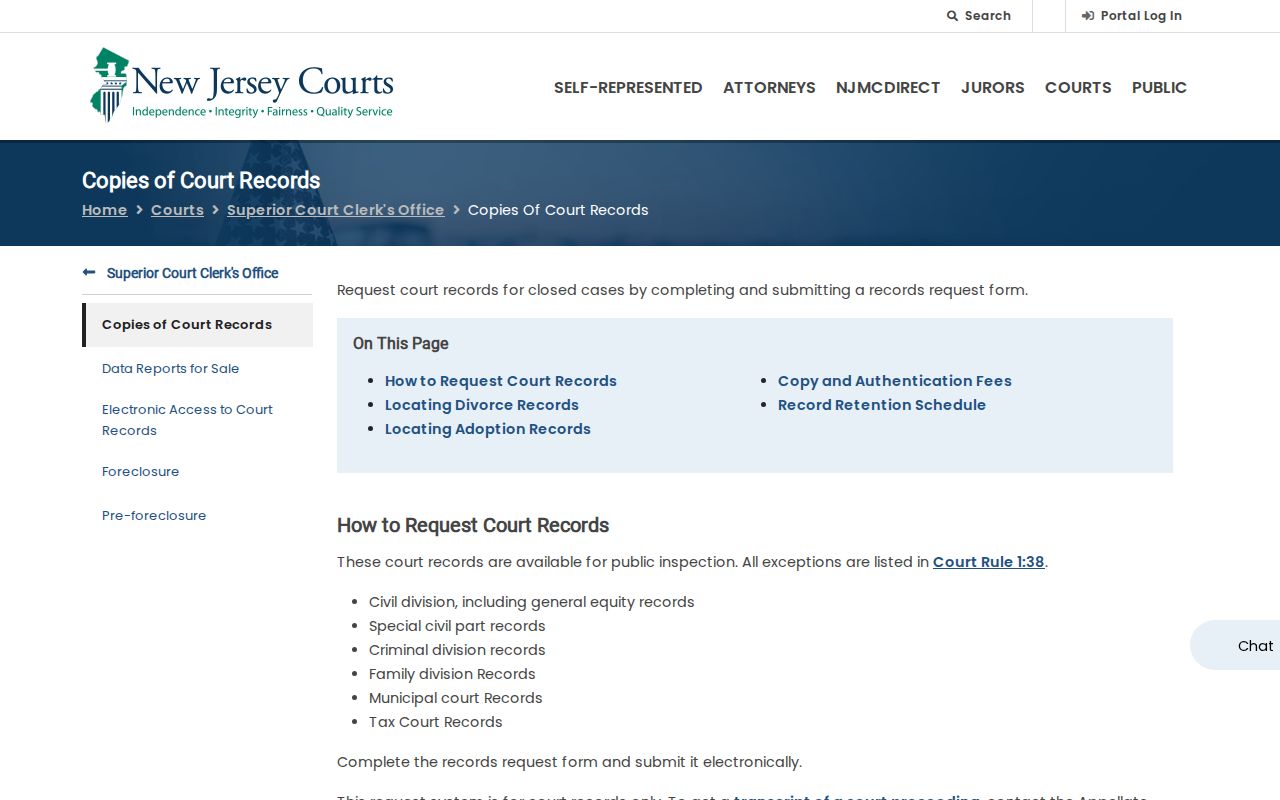
Rule 1:38 governs public inspection of court records. Letter pages cost 5 cents and legal pages 7 cents. A certified copy runs $15, a seal $10, an exemplified copy $50 more, and a statewide judgment-lien search $10. Divorce and adoption materials carry added restrictions. Request forms route you to the right division and county. They do not open sealed or confidential files.
Princeton Municipal Court sits at 400 Witherspoon Street, reachable at 609-924-5042, open Monday through Friday from 9 to 4. Its FAQ names the court as the fallback when a ticket or complaint number is unavailable. Never use OPRA to work around court confidentiality rules. Court rules and the proper custodian govern the file.
Princeton Vital Record Windows
The Princeton Health Department serves as local registrar for birth, death, and marriage certificates. Contact the municipality where the event occurred. An event in Princeton still does not prove a named party lived in Princeton. The New Jersey Office of Vital Records and Registration holds births from 1925, marriages and deaths from 1951, domestic partnerships from 2004, and civil unions from 2007. The State Archives keeps the earlier series. Those include births from May 1, 1848 through December 31, 1925, plus marriages and deaths through December 31, 1950, with selected databases and microfilm. For older family-history questions, the archives are the natural first stop.
Princeton Health Department information identifies the local registrar route for event records.
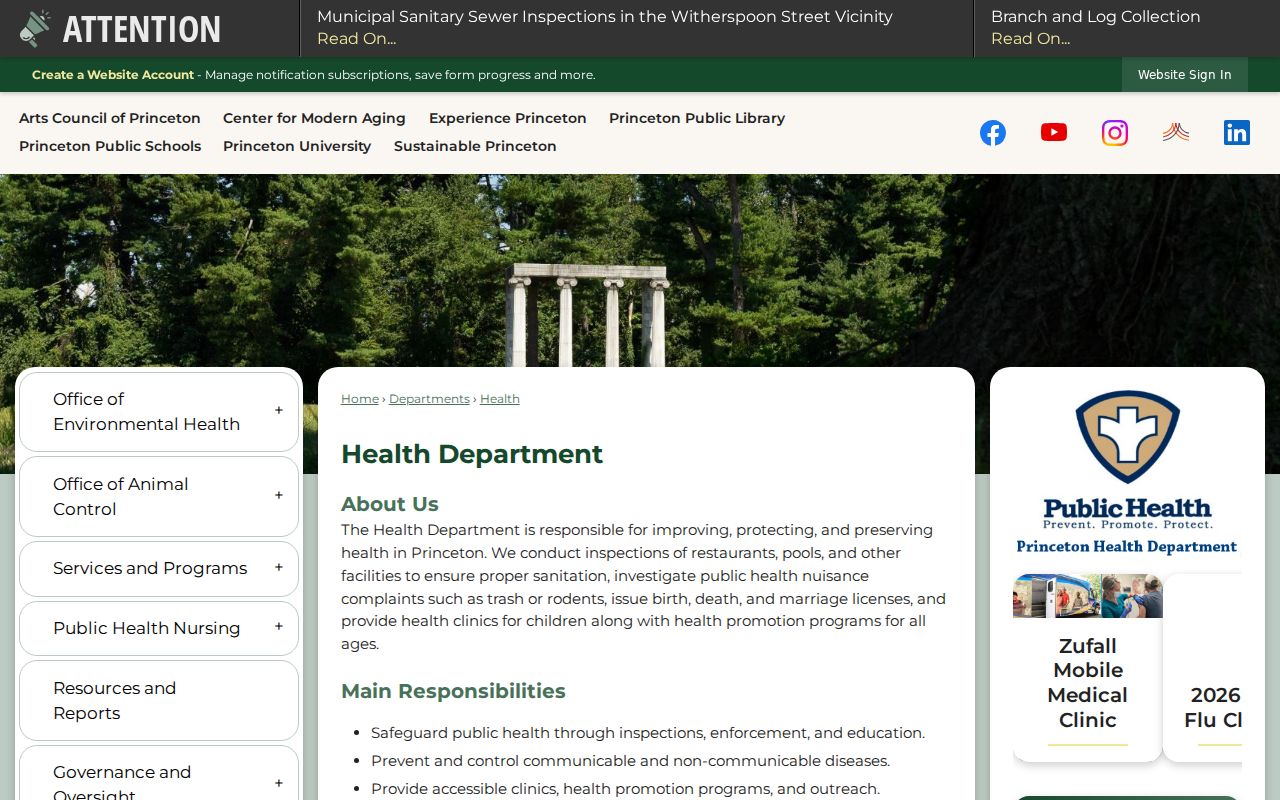
Current non-genealogical requests face state-set windows. Births stay restricted for 80 years, marriages for 50, and deaths for 40. All domestic partnerships and civil unions remain in scope. The REG-27a form asks for a copy type, requester relationship, proof of relationship, a signature, contact information. It also needs the event's names, place, and date. A certified copy generally requires an eligible relationship or legal authority. A genealogy copy is a different request entirely. It is not proof of identity.
New Jersey Vital Records is the statewide access point. It lists forms, current fees, and order choices.
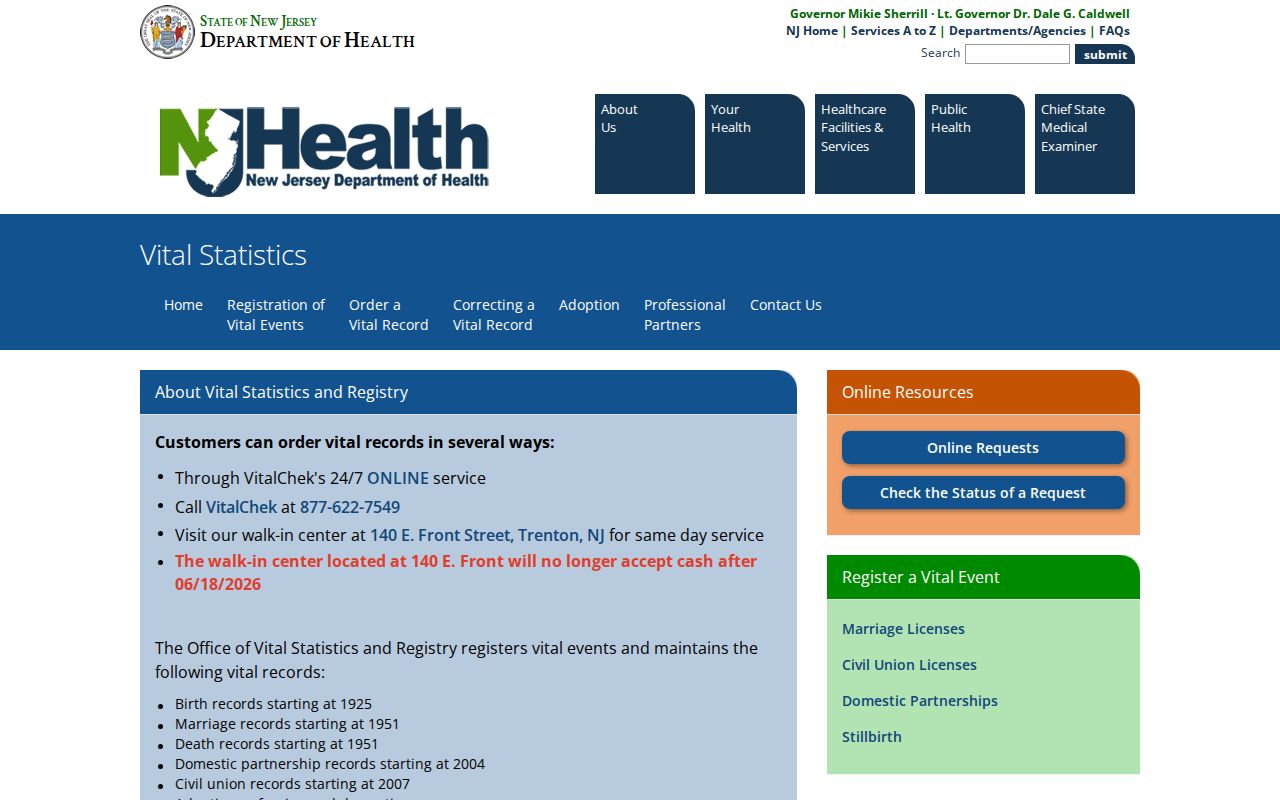
The state charges $25 for the initial search or copy, and $2 for each additional copy of the same record. Local fees vary. Online orders may take four to six weeks. The Trenton walk-in location is 140 East Front Street, with same-day submission generally due by 3:30. Check the current instructions before sending payment.
The New Jersey State Archives genealogical collections identify the series that answer older family-history questions.
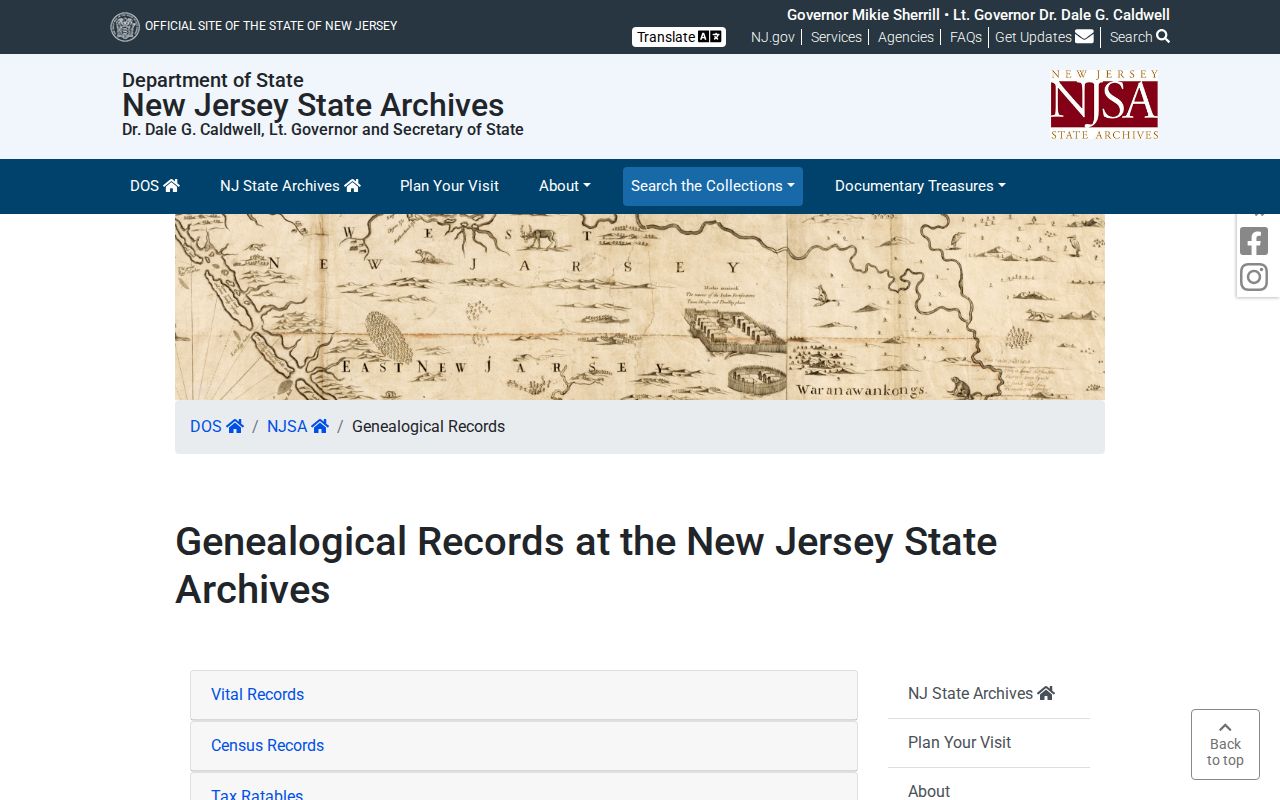
Appointments are preferred at the Archives research room. It sits on the second floor at 225 West State Street in Trenton. Visitors can use searchable databases there, conduct research on site, or submit a mail request. The collection list maps a path to a series. It does not promise a digitized name result for every search.
Princeton Voter Lookup Limits
The state Voter Search works on exact names. New Jersey election guidance requires an exact match to the county record. Hyphens and spaces can break a match. So can middle initials, nicknames, and changed surnames. A result may confirm spelling, date of birth, city or county, and voter ID. The live field labels and result markup stay hidden until a search runs, and no further display fields should be assumed. A failed lookup can mean a spelling slip. It could also mean a county mismatch, inactive or removal status, a protected voter, or a portal limit.
Mercer's Superintendent of Elections offers a separate regulated list route under OPRA. Requesters must give their own name and address. They must describe the specific list wanted. They must also state that the material will not be used for commercial purposes. Title 19 sets a 25-cent charge per copy of an election-district list. The Mercer page itself lists no current fee or delivery format. There is no public block browse and no ZIP filter. The official sources also carry no general name roster.
- Use the official exact-name search only for a lawful, specific registration question.
- Record the date checked and the geography returned, without republishing sensitive identifiers or an address.
- For an eligible list request, name the exact election district or clearly defined record needed and include the required noncommercial statement.
- Ask the Mercer custodian about the current fee, redactions, and format before sending payment.
Election data should never be used to infer ballot choices, turnout, a current private address, or continuous residence. The statute restricts commercial and charitable solicitation. A voter result deserves the same date and source discipline as any other record.
Princeton Resident Record Boundaries
New Jersey's Open Public Records Act appears at N.J.S.A. 47:1A-1 et seq. A written request goes to the custodian who holds the specific record. Agencies generally answer within seven business days when a record is available, though exemptions, immediate-access rules, and special circumstances can change that outcome. Inspection is generally free. Copy costs and special-service charges can apply. Princeton's form flags protected material, including Social Security and driver-license numbers, unlisted phone numbers, student identifiers, victim information, public-defender files, and security-sensitive records.
Daniel's Law shields home addresses and unpublished phone numbers for covered judges, prosecutors, law-enforcement officers, child-protection investigators, and their immediate family. Mercer closed its public PIP because the map could not provide redaction. The state GIS Property Explorer redacts owner names. The Address Confidentiality Program gives qualifying survivors a legal substitute address with mail forwarding. A substitute address is not a physical-location lead. Neither program should be worked around through maps, parcel numbers, or older snippets.
For a correction question, give the custodian the record identifier, the precise disputed field, supporting documentation, and a request for the correction procedure. Never change a public record on your own. Never report a correction before the custodian confirms it. Keep source, date, record type, and confidence beside every lawful finding.